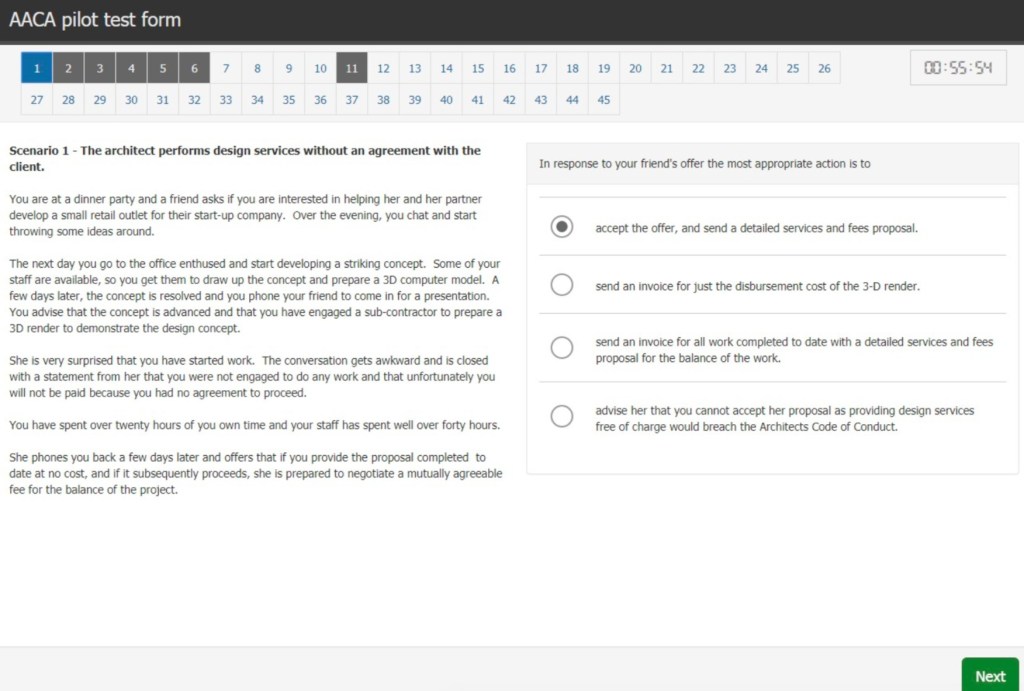
Preparing for the architectural registration exam in Australia can feel overwhelming — especially when it comes to the National Examination Paper (NEP).
Many candidates ask:
- How hard is the APE NEP?
- What does the National Examination Paper actually test?
- How do I prepare while working full time?
- Is it about memorising legislation?
If you are preparing for the Architectural Practice Examination (APE), this guide will help you understand what the NEP is really assessing — and how to prepare strategically.
What Is the National Examination Paper (NEP)?
The National Examination Paper (NEP) is Part 2 of the Australian Architectural Practice Examination.
It is a scenario-based exam designed to assess whether a candidate demonstrates the minimum level of professional competence required for architect registration in Australia.
The NEP is not a design test.
It is not a drafting test.
It is not a memory test.
It is a professional judgement test.
The exam is based on the National Standard of Competency for Architects (NSCA) and evaluates whether you can:
- identify and manage risk,
- understand legal and ethical responsibilities,
- act within your contractual authority,
- communicate appropriately with clients, consultants, and contractors,
- and respond proportionately to real-world practice situations.
What the APE NEP Is Really Testing
One of the biggest mistakes candidates make in registration exam preparation is assuming the NEP tests technical knowledge in isolation.
In reality, the NEP consistently focuses on:
1. Risk Awareness
Can you identify where risk sits in a scenario — contractual, financial, safety, ethical?
2. Professional Boundaries
Do you understand what an architect is responsible for — and equally important, what they are not responsible for?
3. Proportionate Action
Do you escalate appropriately?
Do you document properly?
Do you confirm information before instructing?
4. Duty of Care
Are you protecting the client?
Are you protecting the public?
Are you protecting yourself?
In many NEP questions, multiple answers may appear technically possible. The correct answer is usually the one that reflects:
- clarity of responsibility
- appropriate documentation
- confirmation before action
- risk management before convenience
Common NEP Exam Mistakes
Understanding how candidates fail is just as important as understanding how they pass.
Mistake 1: Choosing the “Safest” Option Every Time
Some candidates respond to risk by selecting extreme caution — stopping work immediately or refusing to act.
But architects are not hired to freeze projects. They are expected to manage risk responsibly, not avoid it entirely.
Mistake 2: Acting Outside Authority
Other candidates choose the most “active” or “helpful” response — approving variations, issuing instructions, making decisions — without confirming whether they have contractual authority.
The NEP frequently tests this.
Mistake 3: Answering as the Builder or Project Manager
The NEP tests the architect’s role — not the contractor’s, not the certifier’s, not the project manager’s.
When in doubt, ask:
“What is the architect contractually responsible for here?”
How to Prepare for the NEP Effectively
Effective registration exam preparation is not about memorising legislation word-for-word.
It is about training your professional thinking.
Here is a practical approach used by successful APE candidates:
1. Understand the Competency Framework First
Before doing practice questions, understand the four competency areas in the National Standard of Competency for Architects.
If you don’t understand the framework, NEP questions will feel random.
Once you understand the framework, questions begin to follow patterns.
2. Practise Scenario-Based Questions
The NEP is scenario-driven.
You should be practising questions that force you to:
- identify risk,
- determine responsibility,
- prioritise actions,
- choose proportionate responses.
Quality matters more than quantity.
When reviewing practice questions, ask yourself:
- Why is this the best answer?
- What risk is being managed?
- What boundary is being protected?
3. Integrate Preparation Into Your Daily Work
If you are working full time, your job is already your best preparation tool.
Each week, reflect:
- Did I manage a consultant issue?
- Did I respond to a builder query?
- Did I identify a compliance risk?
- Did I document advice?
Every one of these experiences relates directly to the NEP.
The strongest candidates do not separate “exam study” from “practice experience.” They connect them.
4. Avoid Burnout Study Patterns
Cramming legislation the week before the exam rarely works.
Instead:
- Review one competency group at a time.
- Do a small number of mock questions regularly.
- Reflect on reasoning, not just outcomes.
Short, consistent sessions are more effective than long, infrequent ones.
Why Many Candidates Feel Lost Preparing for the NEP
Official information about the Architectural Practice Examination is available through AACA.
However, it is often spread across:
- competency documents,
- administrative guidelines,
- online logbook systems,
- exam result breakdowns.
While accurate, these materials do not always explain how the exam thinking works in practice.
This is why many graduates search for:
- APE study guide
- NEP preparation resources
- Australian architectural registration exam practice questions
- How to pass the APE
Not because the information is unavailable — but because interpretation is missing.
A Structured Study Guide for NEP Preparation
For candidates looking for a clear and structured approach to registration exam preparation,
Pathway to Registration: An Australian Architectural Practice Examination Study Guide was written specifically for Australian APE candidates.
The guide includes:
- clear explanations of the National Standard of Competency,
- structured guidance on logbooks and Statements of Practical Experience,
- NEP-style mock exam questions with detailed reasoning,
- and full mock registration interview preparation.
Rather than simply repeating official information, it focuses on interpreting what the exam is really testing — and how professional judgement is demonstrated.
You can find the study guide on Amazon here:
👉 Pathway to Registration: An Australian Architectural Practice Examination Study Guide

 Beyond Design Collective
Leave a comment